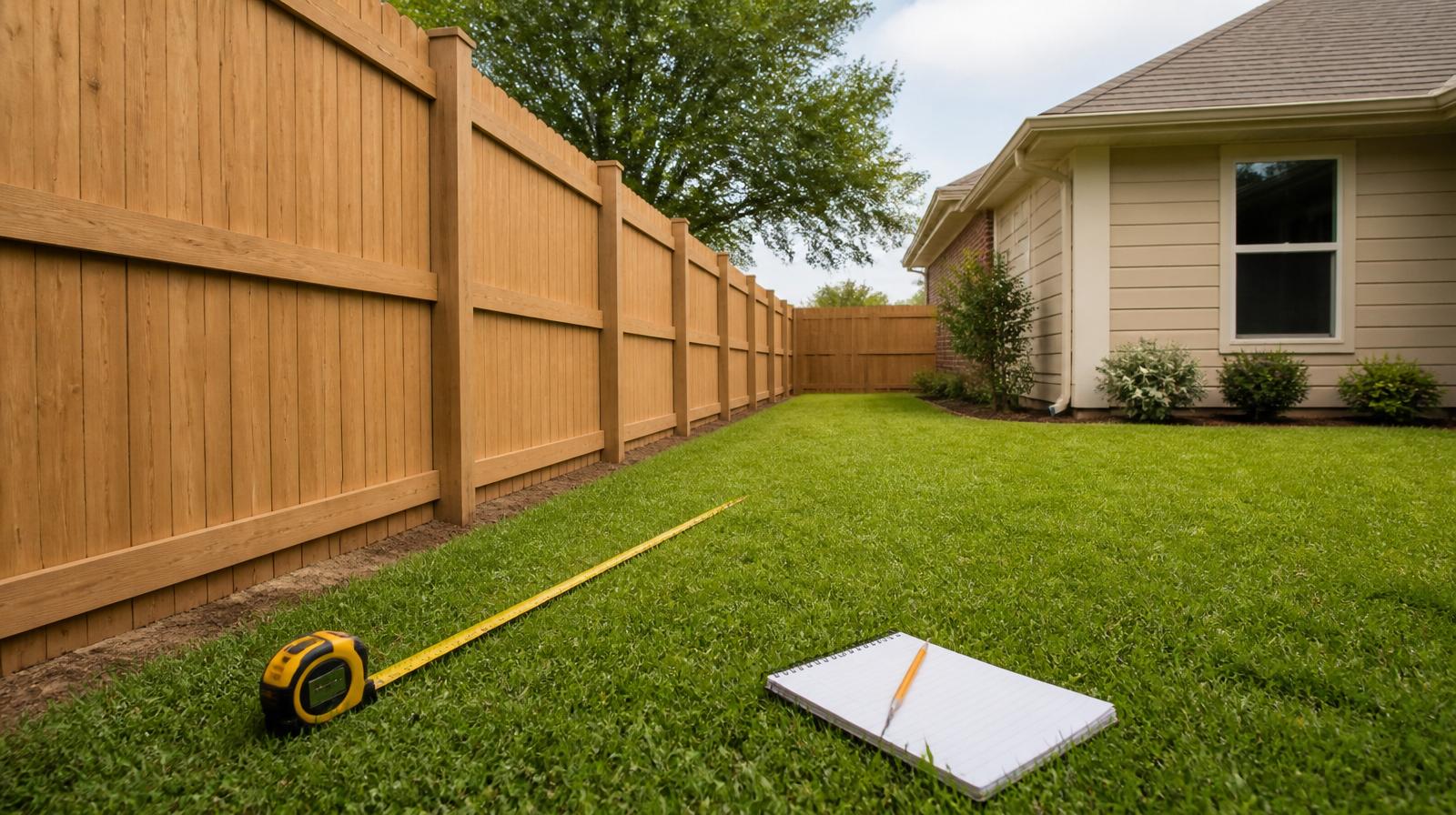
Requesting a fence quote takes one form, but a little prep beforehand helps a local Paris fence pro give you a faster, more accurate answer — instead of a wide "it depends" range. You don't need exact measurements or to know every detail, but having a rough idea of a few key things speeds everything up.
This guide walks through what's genuinely helpful to know before you submit a quote request.
What you don't need to know yet
Before getting into what helps, it's worth saying clearly: you don't need to be an expert. If you're not sure about fence type, material, or exact length, that's fine — selecting "Not Sure Yet" on the request form is a normal answer, and a local fence pro can walk you through the options when they look at your property. Prep just makes the first conversation more useful.
Measuring your fence line (roughly)
You don't need a tape measure and a perfect number — a rough estimate is genuinely useful. A few ways to get close:
Pace off the fence line and estimate (an average adult stride is about 2.5–3 ft)
Check a property survey or plat map if you have one
Use a mapping app's measuring tool on your address
Just estimate "about the length of two cars" or similar — anything beats a total guess
Even a rough number like "around 150 feet" helps a pro give you a more useful starting range before the on-site visit.
Deciding on project type
Know which category your project falls into before you start the form:
New fence — nothing there yet, or replacing the whole line
Fence repair — fixing storm damage, leaning posts, or a broken section
Fence replacement — an old fence is coming out, new one going in
Gate installation — adding or replacing a gate specifically
Commercial fence — for a business, storage lot, or rental property
This single decision shapes which questions matter most for your quote.
Choosing a fence type (or not)
If you already know you want wood, vinyl, chain link, privacy, metal/aluminum, or ranch/farm fencing, great — note it down. If you're still deciding between options, that's completely fine too. A useful middle ground is narrowing it to a goal instead of a material: "I want privacy," "I want something low-maintenance," or "I just need to contain my dog" — a local pro can match that goal to the right fence type.
Gates: count and type
Gates add cost and complexity, so it helps to think through:
How many gates you'll need (a single walk gate, a double drive gate, etc.)
Where they'll go (backyard access, driveway, side yard)
Whether you want manual or automatic for a drive gate
If you're not sure yet, just note that gates will likely be needed — exact count can be confirmed on-site.
Photos that help
If you're requesting a repair or replacement quote, a couple of photos of the damaged or existing fence (taken from a few feet back, showing the full section) give a local pro useful context before they even arrive. For a new fence, a photo of the yard or property line area can help too, though it's optional.
Timeline and contact preference
Two quick decisions make the process smoother:
Timeline — ASAP, 1–2 weeks, about a month, or just researching for now
Contact method — call, text, or email, whichever you actually check first
Being upfront about timeline (especially "just researching") helps set the right expectations on both sides — there's no pressure either way.
Ready to request your quote
With even a rough length estimate, your project type, and a sense of what you're after, you're ready to submit. Fill out the short form, and a local Paris fence professional may reach out using your preferred contact method to discuss the details and provide a quote based on your property. There's no fee to request a quote and no obligation to move forward.